Why Software Bugs Happen Early — And Why Testing Too Late Costs Startups More
Discover why late testing increases costs and how early QA prevents release failures.

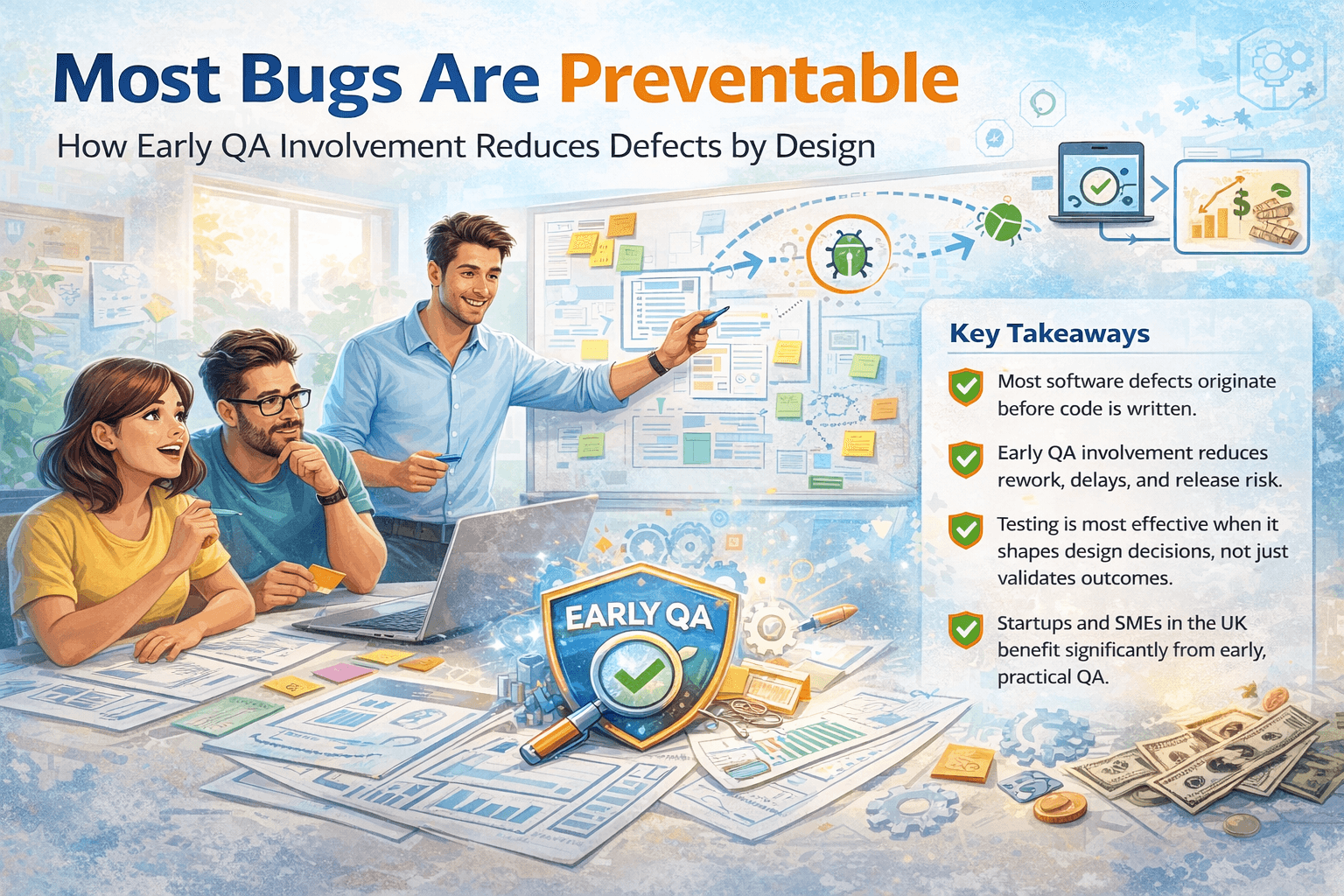
- Most bugs originate from late testing, not bad code.
- A balance of manual and automation testing is crucial for full coverage.
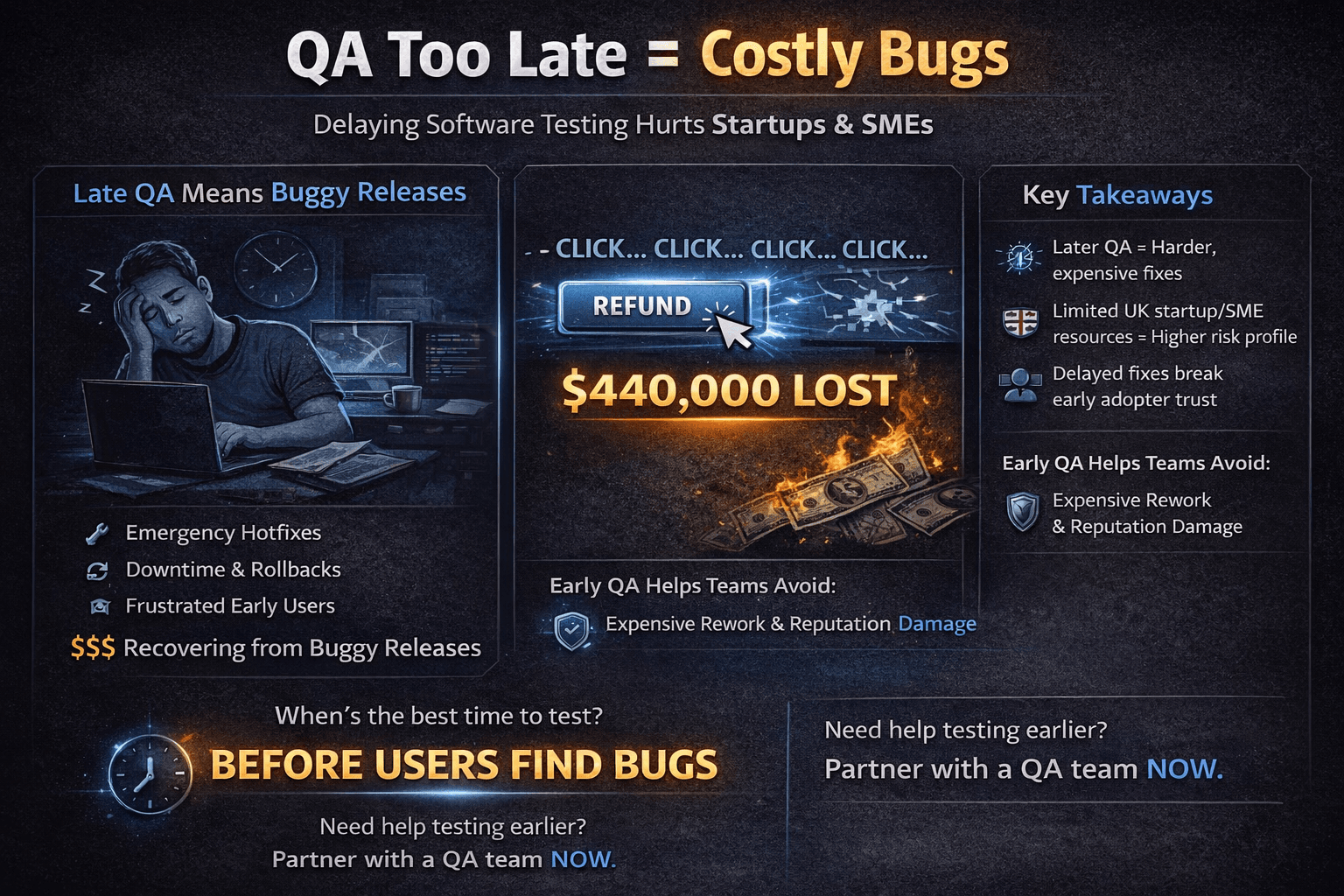
- Early QA saves startups from high costs, user distrust, and growth delays.
- Good QA integrates with your team to prevent bugs, not just find them.
Introduction
Most software bugs don’t come from bad code. They come from testing too late.
Startups and growing product teams often assume quality assurance is something to “add later” — just before launch. In reality, this approach leads to higher costs, rushed fixes, and poor user experiences.
At KualitySoft, a software testing company providing professional QA services, we regularly see products struggle not because of weak development, but because QA was introduced after critical decisions were already locked in.
The Real Reason Bugs Slip Into Production
When QA is involved late in the development cycle, testing becomes reactive instead of preventive because:
- Requirements are already fixed
- Timelines are compressed
- Changes become expensive and risky
Early QA helps teams:
- Validate requirements before development starts
- Identify edge cases early
- Reduce rework and last-minute fixes
Good QA doesn’t slow teams down — it protects momentum.
A Real Bug Story: When Automation Wasn’t Enough
One product we supported had passed all automated test suites successfully. There were:
- No pipeline failures.
- No visible errors.
- No warnings.
However, during manual testing, we uncovered a critical issue:
- A broken payment flow
- Occurring only on one mobile device
- Affecting first-time users only
Automation didn’t catch it — because automation tests expected behaviour.
A human tester caught it — because users don’t behave predictably.
This is a common scenario.
Manual Testing vs Automation Testing: The Right Balance
Automation testing is essential for:
- Speed
- Regression coverage
- Repetitive checks
Manual testing is critical for:
- User experience
- Exploratory testing
- Edge cases and unexpected behaviour
Strong QA services don’t choose one over the other. They understand the difference between manual and automation testing and combine both strategically.
At KualitySoft, we help startups and scaleups implement the right balance — ensuring speed without sacrificing quality.
Why Startups Especially Need Early QA
For startups, bugs cost more than just time:
- Early users lose trust
- Reviews suffer
- Fixes delay growth
Introducing QA early allows teams to:
- Release with confidence
- Catch risks before customers do
- Scale without quality becoming a bottleneck
That’s why many teams work with an external software testing company or offshore QA team during their early growth stages.
How KualitySoft Supports Product Teams
Our QA services are designed for startups and growing teams who need:
- Flexible engagement
- Independent quality validation
- Clear reporting and insights
We work alongside development teams to ensure testing is:
- Practical
- User-focused
- Aligned with real business risks
Quality isn’t a phase — it’s a mindset.
Final Thoughts
If users are finding bugs before your team does, QA is already overdue.
Early involvement of a trusted software testing partner helps prevent surprises, protect releases, and build products users can trust.
If you’re scaling a product and want QA to work with your team — not against deadlines — it may be time to rethink when testing starts. Early testing is the first step toward building true product confidence.